
Look beyond
the spin.
Play, discomfort and repetition can look alike. Learn what to notice, what to leave unknown, and what to bring to your veterinarian.
No diagnosis quiz. No made-up severity score.
During.
After.
Less guessing.
More useful detail.
A dog's spinning is an observation, not an explanation. Build a clear account without turning it into a home diagnosis.
Why dogs chase their tails
Play, learned attention, discomfort and repetitive behavior can look similar. Learn what an observation can and cannot tell you.
02When discomfort may be part of the picture
Why physical causes need a veterinary assessment, and how to record visible changes without making a home diagnosis.
03Play, repetition and compulsive behavior
Understand the difference between describing a repeated action and diagnosing a compulsive disorder.
04The before, during, after observation method
A neutral way to describe tail chasing without guessing about emotion, cause or diagnosis.
05Map context without declaring a cause
Separate repeated situations from proven triggers with a simple observation map and a worked example.
06Enrichment is support, not a diagnosis
How to discuss suitable activity and reward-based alternatives without using them as a substitute for veterinary care.
07Prepare a useful veterinary conversation
Bring an honest timeline, visible concerns and focused questions, without waiting to complete a diary.
Describe one episode.
Keep the uncertainty.
Our original worksheet separates what you saw from what you think it meant. Mark a missed start, an estimated duration or an unknown lead-up. Export a plain-text note for a veterinary conversation.
Open the worksheet ↗Before
Doorbell rang. Start observed.
During
Turned toward tail. Duration unknown.
After
Moved behind sofa. Rest of episode not seen.
This does not prove that the doorbell caused the behavior.
Questions belong
in context.
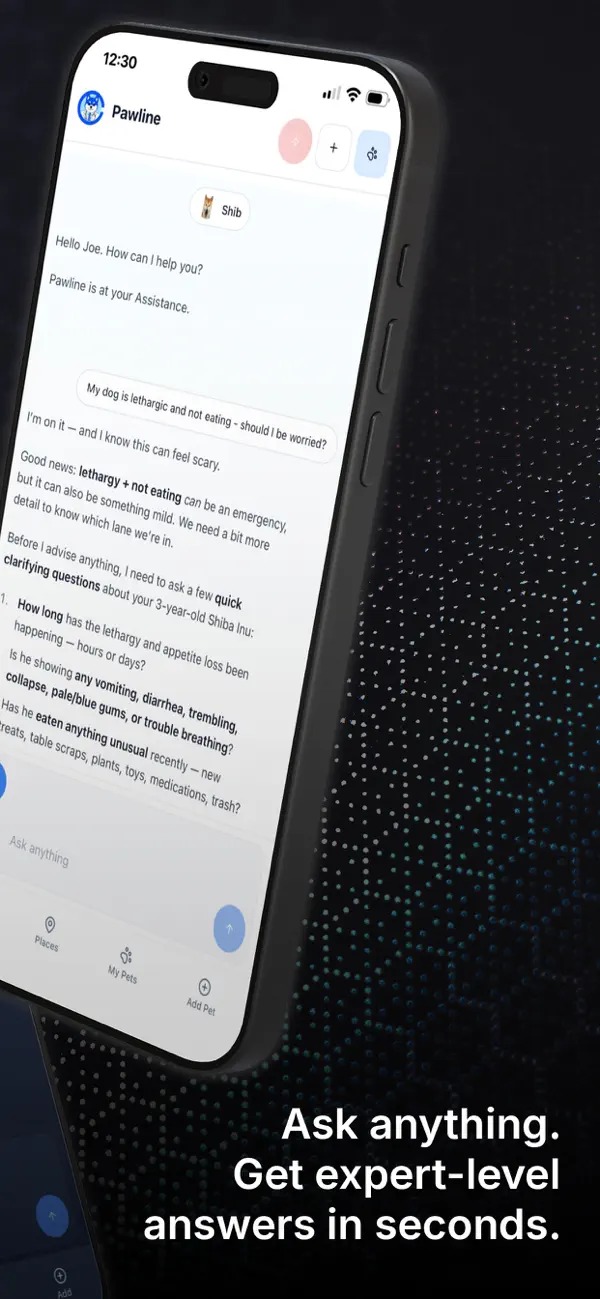
A pet's history matters. PawLine is built to organize pet-specific questions. It is not a veterinarian, and this guide never uses an app response as a clinical sign-off.
See PawLine in your store ↗Official product screenshot. Store offers and trial terms may vary.
Keep observations honest.
Why one episode is not a diagnosis ↗
Editorial team · November 12, 2026